
Turning Product Questions into Guided WhatsApp Consultations for a Home Décor Store
Illustrative case study: how a home décor retailer could turn scattered product questions into contextual, staffed WhatsApp consultations.
By jsyxiPublished
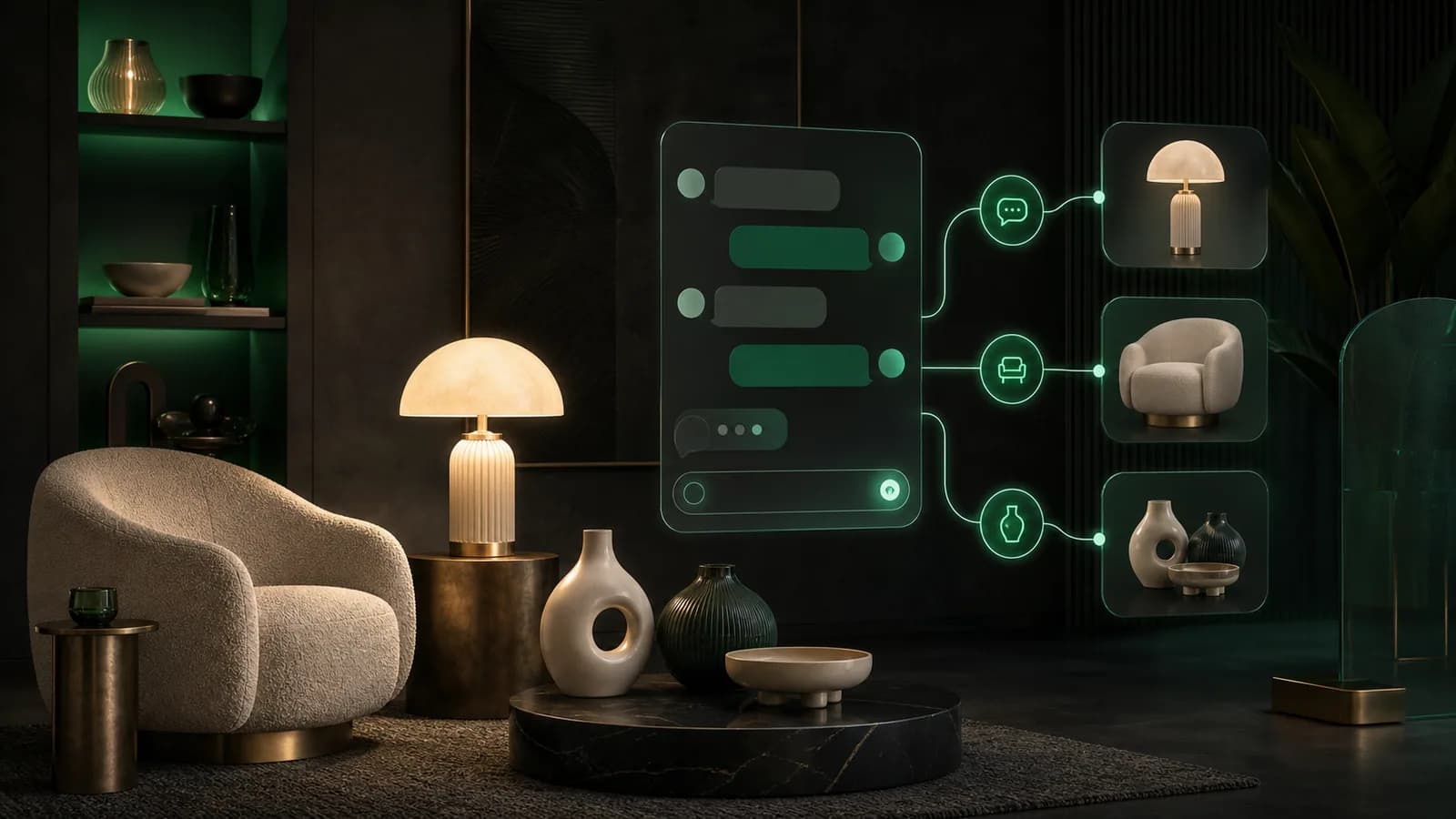
Illustrative case study: This is a representative scenario created to explain a practical approach. It is not a named customer claim, testimonial, or guarantee of results.
Context
Picture an online home décor store selling lighting, mirrors, occasional furniture, and handcrafted accessories. Customers often need more than a product description before ordering. They ask about scale, finish, bulb compatibility, wall type, delivery access, care, and whether several pieces will work together in one room.
The store already displays a floating message button, but it sends every visitor to the same number with a blank conversation. Staff members spend time asking which product the customer means, while shoppers receive uneven answers depending on who is available. The business wants to make chat genuinely consultative without pretending that a widget alone provides interior-design expertise.
The challenge
High-consideration questions carry context. A shopper asking “Will this fit?” may mean physical dimensions, visual scale, access through a doorway, or installation requirements. A generic greeting transfers the work of explaining the page back to the customer. At the same time, automatically sharing a cart or collecting room photos introduces privacy and handling responsibilities.
The operational problem is as important as the interface. The store needs clear hours, ownership, escalation, and an authoritative source for product and delivery information. Otherwise a more visible chat button can create a larger unmanaged queue.
Strategy
The team defines three supported conversation types: product clarification, coordinated-room selection, and delivery or installation feasibility. Existing-order changes continue through the verified support route. Each chat entry point carries only safe page context and explains when the channel is staffed.
Rather than launch everywhere, the team starts on categories where questions commonly block a decision. Product content is improved at the same time, because chat should reveal gaps that can later be solved for every visitor.
Implementation
The team configures the WhatsApp Widget with a business-controlled number, a clear team identity, operating hours, and a truthful response expectation. The launcher stays visible but does not obscure sticky purchase actions, cookie controls, or accessibility tools. When the visitor closes it, it remains closed for that session.
On a product page, the editable prefilled message identifies the public page link and invites a specific question. No hidden customer, cart, or account data is inserted. Collection pages use a different prompt for comparing pieces. A short notice explains that the click opens an external messaging service.
Behind the interface, staff use a simple consultation playbook. They confirm the item and intended space, ask only for the next necessary detail, reference product specifications, distinguish an estimate from a guarantee, and summarise the next step. Questions about electrical work, structural mounting, or other specialist tasks are escalated instead of answered beyond the team's competence.
Product pages gain dimension diagrams, material and finish notes, care instructions, package size, and delivery constraints based on repeated conversations. If a request needs structured measurements, files, or consent, the team sends the visitor to a purpose-built Lead Form rather than collecting everything in an open chat.
Measurement plan
The team records widget views, intentional opens, conversations started, staffed-hours response, topic, resolution, handoff, and the product page involved. It also tracks unanswered threads, repeat questions, cancellations, delivery exceptions, and any consultations that reveal inaccurate content.
An assisted order is labelled according to a documented rule, but the team does not claim that chat caused every later purchase. Conversation volume is reviewed beside service capacity. If starts rise while response quality falls, the experience has not improved.
Weekly content reviews turn repeated questions into page updates. Over time, a healthy channel may handle fewer basic specification questions and more genuinely consultative ones.
Guardrails
- The destination number is owned by the business, with access removed when roles change
- Staff never request passwords, payment credentials, or one-time codes
- Order information is discussed only after the approved verification process
- Room photos and personal information are collected only when necessary and handled under a clear policy
- Availability, delivery, and installation language comes from authoritative sources
- Marketing follow-up requires an appropriate, separate permission
- Chat is not presented as professional structural, electrical, or design certification
Definition of success
Success would mean customers arrive in chat with useful context, receive consistent guidance during stated hours, and reach a clearer decision or handoff. The store should also gain a reliable feedback loop that improves product content and reduces avoidable questions.
The final system is a staffed service promise, not a decorative bubble. Retailers considering contextual routing, CRM handoff, or page-specific prompts can explore E-commerce Development, read setup guidance in the help centre, or contact JSYXI to design the workflow.
Could this approach fit your business?
Start free, or book a consultation to turn the most relevant ideas into a practical plan.