
Simplifying Demo Requests and Lead Routing for a B2B SaaS Team
Illustrative case study: a practical demo-request journey that captures useful context, routes each lead clearly, and gives buyers a confident next step.
By jsyxiPublished
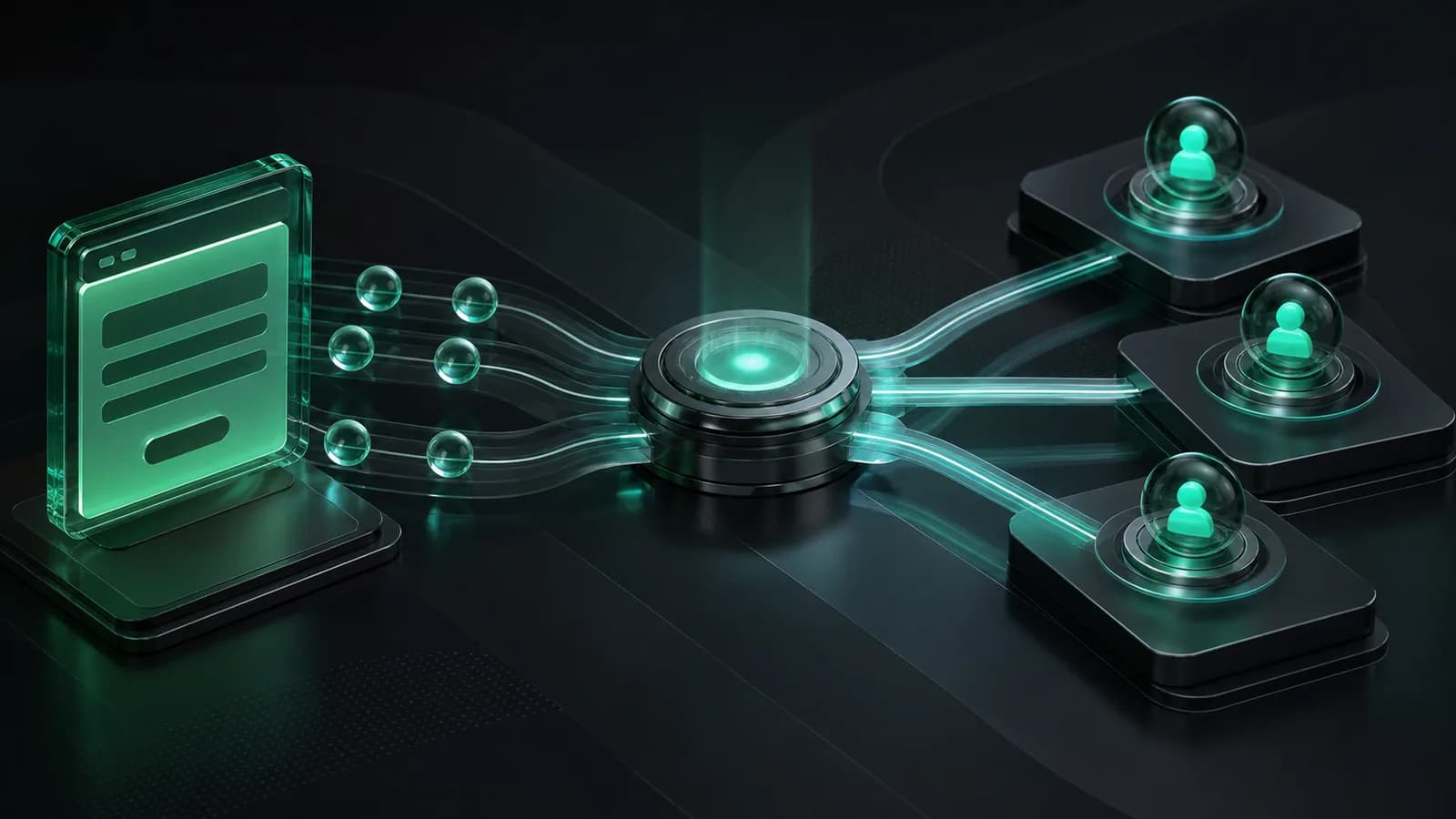
Illustrative scenario: This is a representative scenario designed to show a possible approach. It is not a named customer claim, testimonial, or guaranteed result.
Context
Imagine a growing B2B software company with several products, more than one buyer type, and sales specialists covering different regions. Its marketing site generates interest, but every "Book a demo" button opens the same long form. Requests land in a shared inbox, and a coordinator manually decides who should respond.
The process technically works. The problem is that it makes the buyer repeat context, gives the sales team uneven information, and hides ownership during busy periods. Some people want a product walkthrough, some need pricing guidance, and others are existing customers seeking support. Treating all of them as identical leads creates avoidable work on both sides.
The challenge
The team needs enough information to route a request without turning the form into an interrogation. It also needs a dependable fallback when a routing rule cannot make a confident choice.
The main friction points are:
- Calls to action use inconsistent language across product pages.
- The form asks internal qualification questions before explaining the next step.
- Product, region, company context, and preferred timing arrive in free-text notes.
- Existing customers can accidentally enter the new-business queue.
- Assignment logic lives in staff memory instead of a documented workflow.
- The confirmation screen does not say what happens after submission.
The goal is not simply to collect more forms. It is to make a serious request easier to complete and easier to act on.
Strategy
The proposed journey begins by defining three clear intents: explore a product, discuss a business requirement, or get help with an existing account. Each intent leads to a suitable next step instead of forcing every visitor through the same funnel.
For a demo request, the first screen asks only for essential contact details and the product or problem area. Follow-up questions appear only when they help routing. A visitor selecting a particular solution might see a question about team workflow, while a partner enquiry sees a different path. Optional context remains optional.
Qualification is treated as routing information, not a reason to make unsupported judgments about a buyer. The interface explains why key details are useful and keeps the primary action specific: "Request a product conversation" is clearer than "Submit."
Implementation approach
- Map every demo call to action and give repeated actions consistent wording.
- Build a focused request flow with the form builder, using conditional fields only where they change the destination or preparation needed.
- Carry page and campaign context with the submission so the visitor does not have to type it again.
- Create a routing table based on product, region, account status, and request type, with one accountable fallback owner.
- Send a useful confirmation that summarizes the request, explains the next step, and provides a support route for existing customers.
- Record assignment and reassignment events so process gaps can be reviewed.
- Test the embedded experience on mobile and follow the installation guidance before release.
The CRM or notification layer should reject duplicate event delivery safely. If an integration is unavailable, the request should remain stored and visible rather than disappearing behind a generic success message.
Measurement plan
The team would review the whole handoff, not just the form completion rate:
- Starts, completions, validation problems, and abandonment by device.
- Distribution of request types and products selected.
- Requests accepted by the first assigned owner.
- Reassignments and the reasons behind them.
- Time from submission to the first meaningful staff action.
- Duplicate, support, spam, and clearly irrelevant requests.
- Opportunities where missing context still creates a second qualification step.
These signals should be read together. A shorter form can increase submissions while reducing useful context; a longer form can look efficient while excluding people with legitimate but unusual requirements.
Guardrails
Only collect information needed for the conversation. Explain consent and data use near the form, protect submitted details, and establish a retention policy. Do not ask for sensitive information in a general demo request. Avoid hidden scoring rules that proxy for protected characteristics or dismiss smaller organizations without review.
Routing also needs operational ownership. When territories, products, or staffing change, someone must update and test the rules. The fallback queue needs monitoring, and automated acknowledgements should never imply that a meeting is confirmed when it is not.
What success would mean
Success would be a buyer who understands what will happen next, a sales specialist who receives enough context to prepare, and an operations team that can explain where every request went. The strongest version of this system makes exceptions visible instead of pretending every lead fits a perfect branch.
Teams can start by prototyping the request in Jsyxi tools. For help connecting the form, routing logic, CRM, and reporting into one dependable workflow, explore services or contact the Jsyxi team.
Could this approach fit your business?
Start free, or book a consultation to turn the most relevant ideas into a practical plan.